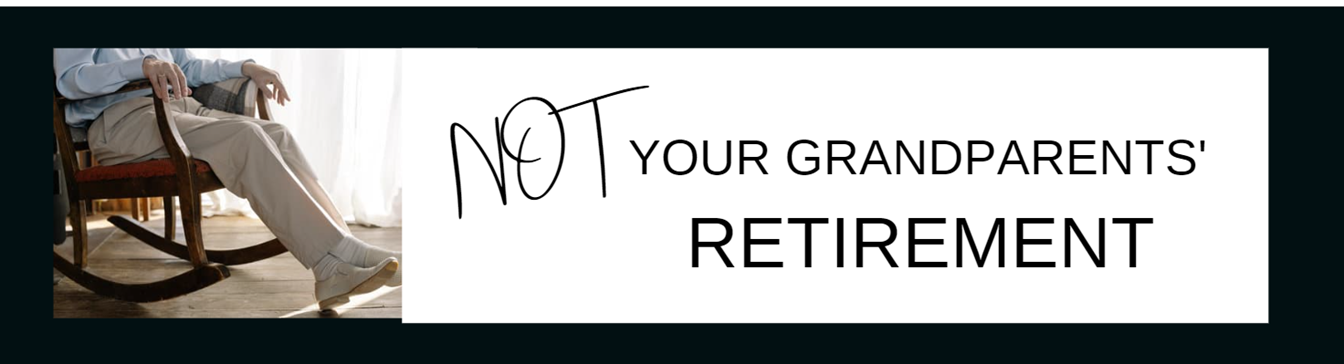
Sitting in a rocking chair until your number gets called? Not today’s retirees!
This is not your parents or grandparents’ type of retirement planning.
retirement questions for the next generation
In the 1930’s, retirement was ‘sitting in a rocking chair until your number gets called’. With a retirement age of 65 years and life expectancy of 68 years (if you were lucky enough to get there), retirement meant living the rest of your days in rest and relaxation.
Today, there is no defined age of retirement. A life expectancy of 82 years (and climbing) means 20-30 years of retirement provide new opportunities. From babysitting the grandchildren to starting a new business, retirees in the 2000’s have near limitless options to find fulfillment, happiness and satisfaction.
It was not that long ago, consensus in the medical community was that "Age 65 was accepted as the age of mental decline". It was considered fact that: physical ability, mental alertness and cooperativeness begin to fail after 65.
To continue working was not an option.Today, continuing work is one of many strategies that retirees embrace as strategy to keep mentally sharp, challenge oneself, stay active, maintain social connections, avoid boredom or to fund a more abundant retirement.
In fact, 1 in 5 choose to work past age 65 or have no plans to retire.
Working is another way to have a purpose in life, and when it’s a choice rather than a necessity, there is virtually no downside.
It used to be a given: Live in the same house for as long as possible, then move to a nursing home for your final days.
Retirees have more mobility and more housing options: Snowbirds moving to warmer climate, or moving abroad for better affordability, moving closer to family, or living in 2-family homes with 'granny flat'
With so many options, it is Important to consider if your new home is conducive to your new lifestyle, close to social networks and health care, and lower maintenance needs.
For Grandad, after 40 years of working, a gold watch and a retirement of leisure was the reward for a life of work. It was a time to slow down. relax and passively hand off responsibilities to the younger generations.
55% of retirees consider retirement ‘A New Chapter in Life’ when they embrace an active lifestyle, and open the door to new beginnings. With more choices and freedoms than ever before, retirement is being redefined.
After spending a career working in the same job (often for the same company), is it any wonder that people’s identities were strongly tied to their profession? When that role is retired, many individuals feel they have lost their identity.
Separating the person from their work identity continues to be a challenge for many professionals. Finding new pursuits, hobbies and passions provide a new identity and purpose in life.
Hey, if you're looking for help preparing your amazing retirement and learning how to stay vibrant, active and healthy, and want to discover your unique purpose, I'd love to help!

Inspired Retirement offers Non-Financial Retirement Planning in a unique online, self-directed program that encourages self-reflection and planning at your own pace. 1-on-1 coaching is also available for those who are looking for a more directed, personalized planning experience.
If you’re curious about the process, contact me at susan@inspiredretirement.ca or simply schedule an appointment here.